
Which Older Callaway Forged Wedge Is Actually Worth Considering?
The 2012 model has the stronger historical case for broad playability; Mack Daddy Forged favors precise contact and trajectory manipulation over forgiveness.
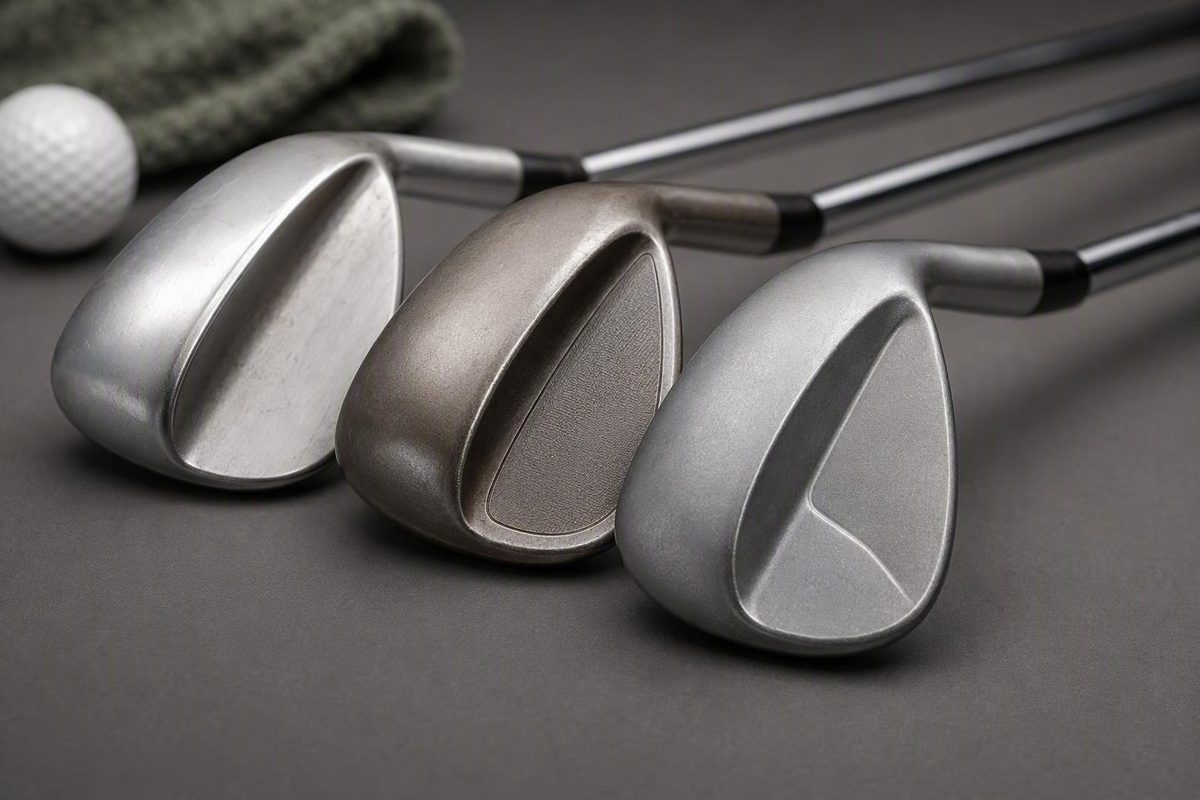
By the I Want Golf editorial team
A search for a “Callaway Forged Wedge” can lead to three materially different clubs: the original model associated with 2002, the better-documented 2012 Callaway Forged Wedge, and the later Mack Daddy Forged. They do not share one specification sheet, sole design, groove pattern, shaft, or performance profile.
This review is an evidence-based synthesis of archived retailer information and historical third-party testing, not a current hands-on test. The models have been assessed separately, measured results have been kept distinct from subjective impressions, and no assumptions have been made about the performance of a normally worn used example.
Of the three, the 2012 wedge has the most persuasive historical case. Multiple reviewers liked its feel, stopping power and C-grind versatility, while a six-player simulator test suggested strong spin and reasonable containment of larger misses. Its principal weakness is equally clear: contemporary reviews reported only one bounce specification per loft, so the sole will not suit every delivery or course condition.
The Mack Daddy Forged was more often characterized as an exacting precision wedge for confident ball-strikers. The original model is historically interesting, but the available archive is a retailer listing rather than an independent test. For any used example, model identity, face condition, sole fit and loft gapping matter more than the word “forged.”
First identify the Callaway Forged wedge in front of you
Begin with the complete markings on the head, the finish, the sole shape and—if it remains original—the shaft. Do not rely on a seller’s title.
| Generation | How historical sources describe it | Original-configuration clues | What not to assume |
|---|---|---|---|
| Original Callaway Forged Wedge, associated with 2002 | Compact head; chrome or a vintage finish intended to rust or change appearance | Retailer-described 1020-carbon-steel construction, milled-flat face, modified U-grooves and proprietary True Temper Memphis Tour steel shaft | Its specifications and promotional claims do not apply to the 2012 club |
| 2012 Callaway Forged Wedge | Clean player-oriented shape, relatively high toe, straighter leading edge, tightly spaced grooves and a wider blended or modified C-grind | Contemporary reviews described 1020 carbon steel, Dark Chrome or Copper finishes, and a Dynamic Gold steel shaft | Groove count alone cannot identify it, and reviews reported only one bounce choice within each loft |
| Mack Daddy Forged | Explicit Mack Daddy or MD Forged branding; squared, stubby or high-toe appearance; heel-and-toe sole relief | Reviews listed Nickel Chrome and dark Slate-style finishes with a Tour Issue S200-family shaft | It is not simply a renamed 2012 wedge and should not be expected to offer the same forgiveness profile |
The original model’s archived description provides especially useful identification clues. The retailer stated that it had a compact 1020-carbon-steel head, a face milled flat with modified U-grooves, chrome and vintage finishes, and a proprietary True Temper Memphis Tour shaft. Those details belong to that early club, not every later Callaway wedge described as forged.
Contemporary coverage distinguished the 2012 version by its compact but somewhat high-toed profile, tightly spaced grooves, straighter leading edge and wide central sole with C-grind relief. Dark Chrome and Copper were the reported finish choices, with the Copper treatment intended to oxidize, wear and develop a changing appearance.
Historical sources disagree on whether the 2012 face carried 21 or 22 grooves. MyGolfSpy and the 2012 material from Today’s Golfer refer to 21, while Today’s Golfer’s later test says 22. The available evidence does not resolve whether this reflects counting or documentation differences. Use the cavity graphics, finish, sole shape, stamps and overall build together rather than treating groove count as definitive authentication.
The later Mack Daddy Forged is easier to separate because of its MD branding and more precision-oriented shape. Reviews variously described a relatively high, stubby or squared toe, a straighter leading edge and relief at both the heel and toe. Nickel Chrome and Brushed Slate, Slate Black or similarly named dark treatments were the reported finishes, while Tour Issue S200 steel was listed as standard equipment.
Standard Opus and Opus SP wedges are outside this review. They belong to different product families. The supplied evidence does not establish that the standard Opus has a fully forged head, while the Opus SP coverage identifies a forged face rather than an entirely forged head. Neither should be folded into an assessment of these discontinued Callaway Forged generations.
What the archived 2002 Callaway Forged listing establishes—and what it does not
The original I Want Golf page is not a hands-on review. It is an archived retailer product listing captured in 2007, with copy identifying the wedge as a 2002 introduction. It is useful for period specifications, options and price context, but not for independently verified performance.
According to the archived Callaway Forged Wedge retailer listing, the compact head was forged from 1020 carbon steel. The retailer described a milled-flat face with modified U-grooves, a proprietary True Temper Memphis Tour steel shaft with a softer tip, and a Golf Pride Tour Velvet grip configured with more rubber, less cord and a built-up lower section.
That listing offered right-handed heads in 52°, 54°, 56°, 58° and 60°, while the listed left-handed choices were 52°, 56° and 60°. Its advertised price was $109.99, with a further $10 charged for vintage-finish versions. Those figures represent one retailer’s historical offer and provide no reliable basis for present used value.
Chrome and vintage finishes were listed. The vintage options were intended to rust or otherwise change appearance, so a darkened or uneven surface may reflect the planned aging process. That does not make deep pitting, flaking corrosion or physical face damage acceptable on a club being considered today.
Claims on the archived page about soft feel, spin, control and playability from rough, sand and tight lies should be treated as promotional statements. The page does not document a tester, shot count, comparison club, playing conditions or launch-monitor method. It cannot establish how a used example performs more than two decades later.
This source limitation also prevents specification drift between generations. The Memphis Tour shaft, Tour Velvet grip, modified U-grooves and early loft range are evidence about the original wedge only. They should not be assigned to the 2012 Callaway Forged Wedge, which contemporary reviewers described with a different groove pattern, finishes, sole and stock components.
The practical verdict on the original is therefore restrained. It may interest a collector or a player who likes compact older wedges, but the archived listing alone cannot support a performance recommendation. A buyer would need to evaluate the actual club’s build, condition and turf interaction.
2012 Callaway Forged Wedge specifications and design
The 2012 Callaway Forged Wedge is the primary subject here because it has the strongest mixture of evidence: multiple hands-on accounts, team evaluations and a documented six-tester simulator exercise. That does not make every historical specification conclusive, but it permits a more informed assessment than the retailer record for the original model.
Contemporary reviews described the head as forged from 1020 carbon steel and shaped with a relatively high toe and straighter leading edge. Reviewers generally saw it as clean and compact, although some thought the toe or overall head looked larger than competing player wedges. It therefore presented a traditional address shape without appearing as visually small as some blade-style wedges.
The wider sole used what Callaway and reviewers called a blended or modified C-grind. In practical terms, the middle of the sole retained width and bounce for a square-faced shot, while relief changed how much of the sole met the ground as the face was manipulated.
That geometry should not be confused with unlimited versatility. Sole relief changes how the head sits and moves through the ground, but it does not erase the wedge’s measured bounce, central sole width or leading-edge shape. A player can appreciate the C-grind on an open-face shot and still dislike the club on a square pitch.
MyGolfSpy described 21 tightly spaced Tour CC grooves as conforming under the rules applicable when the club was new. That is a historical third-party description, not independent verification of any particular used head. Other contemporary material reported 22 grooves, so the safest conclusion is that numerous thin, tightly spaced grooves were a distinguishing visual feature—not that one count authenticates every club.
Reviews listed Dark Chrome and Copper finishes. The Copper treatment was intended to wear, oxidize and form a patina rather than remain cosmetically uniform. Buyers who dislike visible aging may prefer Dark Chrome, but neither finish proves that the underlying face and groove edges remain healthy.
Stock-equipment descriptions differ slightly in specificity. MyGolfSpy listed a True Temper Dynamic Gold steel shaft and Callaway Crossline M58 grip, while The Sand Trap specified Dynamic Gold S300 and a Lamkin Crossline M58. A used club may since have been reshafted, shortened, extended or regripped, so the installed components should be assessed rather than inferred from the original review.
The Sand Trap listed lofts from 48° through 64°, with one bounce option per loft and bounce values ranging from 8° to 11°. That review does not supply a fully verified official loft-by-loft configuration table, so the range should not be converted into an assumed specification for a particular head. A club professional can measure the actual loft, lie and build if alteration is suspected.
The recurring fitting limitation was the reported one-bounce-per-loft structure. Unlike a wedge family offering low-, mid- and high-bounce versions at the same loft, the 2012 line largely required players to accept the prescribed pairing. The C-grind added shotmaking options, but it did not create an alternative sole for a golfer who needed materially more or less bounce.
Performance review: full swings, spin, and distance control
The most useful measured evidence comes from MyGolfSpy. Six testers selected 52°, 56° or 60° wedges and hit toward a 100-yard target on aboutGolf simulators. Proximity accounted for 75% of the performance calculation and spin for 25%.
The group averaged 23.22 feet from the pin and 9,249 rpm. Removing the least accurate tester improved average proximity to 21.47 feet, while removing the lowest-spin tester increased average spin to 9,673 rpm. MyGolfSpy interpreted the pattern as better at containing major misses than producing exceptional pin-seeking precision, and testers also gave high subjective marks for feel and perceived forgiveness. These are group results from that specific exercise, not performance promises for an individual golfer, as detailed in the MyGolfSpy 2012 Callaway Forged Wedge test.
Those figures require immediate context. Testing occurred indoors at one target distance, not across variable carries, turf, rough or bunkers. Testers selected different lofts, and severe shanks were discarded. Removing extreme misses can make dispersion appear more favorable than an all-shots record, while mixing lofts makes the average less representative of any one retail configuration.
The scoring method matters as well. A result weighted 75% toward proximity naturally emphasizes shot location over raw spin. The publication’s “miss containment” interpretation is therefore more useful than reading the overall score as proof that the wedge was exceptionally accurate. The test suggests a degree of stability on 100-yard swings under its protocol, not universal forgiveness.
Today’s Golfer’s test results provide separate observations. Its 2012 material reported 7,445 rpm and a 21° launch from a lie board, while its 2013 fairway test reported 5,333 rpm and 29°. The same page also reports rough figures under separate test formats. Ball model, exact loft, player, strike quality, equipment settings and sample size were not fully documented, so these numbers should not be treated as a controlled comparison or ranking.
The gap among 9,249, 7,445 and 5,333 rpm is not evidence that one publication must be wrong. Even two results labeled as fairway or full-shot testing are not directly comparable when those inputs and protocols differ.
The qualitative pattern is more consistent. Historical reviewers repeatedly praised impact feel, stopping power and control on fuller shots. A GolfWRX tester used the 50° model for approximately 100- to 115-yard shots, although that was an individual observation from a skilled, high-speed player rather than a representative distance claim.
The Sand Trap reviewer separately reported repeatable distance control on approximately 100-yard swings with the sand wedge. That is one player’s experience rather than a controlled group result, but it supports the broader historical impression that the 2012 club could perform predictably on square-faced, fuller swings when the sole and loft suited the player.
Overall, the full-swing case is credible by the standards of a discontinued wedge. The club combined favorably reviewed feel with substantial spin observations and acceptable dispersion in one simulator protocol. It was not established as best in class, and no buyer should expect to reproduce a particular rpm or carry number.
Performance by lie: chips, pitches, rough, tight turf, and bunkers
The 2012 C-grind received broad praise, but its performance varied with delivery and bounce preference. A lie-by-lie summary makes the trade-offs clearer.
| Shot or lie | Historical assessment | Buying implication |
|---|---|---|
| Square-faced chips | Generally satisfactory when the shot did not depend heavily on bounce | Plausible for a player who clips the ball cleanly; less supportive for someone wanting a broad, high-bounce sole |
| Pitches | Positive for several reviewers, but one player found turf pitches less convincing | Test ordinary square-faced pitches rather than assuming open-face versatility applies to every motion |
| Open-face shots | The subtle C-grind was judged more capable than its appearance suggested | Most relevant to golfers who routinely vary face angle |
| Flop shots | Reviewers reported satisfactory to strong results | Technique remains essential; the grind does not create the shot automatically |
| Rough | Reviewers generally liked the head’s passage through different grass lengths | Grass density, moisture and strike location will change the result |
| Tight lies | Frequently praised, particularly with the face opened | Potentially attractive for shallow or neutral deliveries on firm surfaces |
| Mid-length grass | Today’s Golfer’s team reported uncomplicated passage through the grass | A subjective team assessment, not measured resistance |
| Bunkers | Strong overall, including especially positive lob-wedge observations | Sand depth, texture and bounce preference remain decisive |
The GolfWRX hands-on review reported effective performance from tight lies, rough, bunkers, chips, pitches, flops and full swings. The tester identified himself as a six-handicap golfer with a driver speed of 105–111 mph and a six-iron speed of about 93 mph, and he preferred higher bounce. His results show what one skilled, fast player could do with the sole; they do not establish the same outcome for every buyer.
Today’s Golfer’s teams also praised the wedge’s movement through grass and sand and gave strong subjective versatility assessments. The testers liked the wider C-grind while noting the lack of bounce alternatives. Those judgments support the idea that the sole allowed varied shots, but they do not establish equal suitability across attack angles or course conditions.
MyGolfSpy found the blended C-grind more useful with an open face from tight lies than its understated appearance suggested. That is relevant when inspecting the club: the sole may not look aggressively relieved, yet historical testers found that rotating the face reduced interference in certain shots.
The strongest counterpoint comes from The Sand Trap’s detailed review. Its reviewer found the lob wedge exceptionally useful in bunkers and could vary trajectory there. Chips that did not depend heavily on bounce and flop shots were satisfactory. Turf pitches were less impressive because the reviewer wanted more bounce and greater trailing-edge relief.
These accounts are not necessarily contradictory. A sole can help when the face is opened yet remain poorly matched to a golfer’s square-faced delivery. In this context, “versatile” means that the grind permitted several face positions for the reviewers; it does not guarantee compatible turf interaction for every swing.
The appropriate conclusion is conditional. Historical testing supports the C-grind’s usefulness for golfers comfortable manipulating the face, especially from tighter lies.
Player fit, forgiveness, and the single-bounce trade-off
The 2012 wedge fits most confidently when the golfer likes a clean, compact head, makes reasonably consistent contact and uses face manipulation as part of the short game. It is less certain for players who rely on a broad sole to compensate for inconsistent low-point control.
| Player characteristic | Likely fit | Why |
|---|---|---|
| Shallow or neutral attack angle | Generally favorable on firm-to-medium turf | Straighter leading edge and sole relief may help the head sit close to the ground |
| Steep attack angle | Test carefully | The prescribed bounce may suit some swings but offer insufficient support for others |
| Firm or tight turf | Often favorable in historical reviews | Relief can help when the face is opened without presenting the entire sole |
| Medium turf | Broadly plausible | Wider central sole provides support on square swings |
| Soft turf or fluffy sand | Conditional | Golfers who need substantial bounce may require a different sole |
| Lower-bounce preference | Potentially strong | Compact shaping and relief may suit a golfer who clips the ball |
| Higher-bounce preference | Uncertain | The reported single-bounce structure leaves no same-loft alternative |
| Consistent strike pattern | Stronger fit | The design is best supported by reviews involving controlled contact |
| Inconsistent low point | Weaker fit | Compact shaping and limited sole choice offer less protection against heavy contact |
| Frequent open-face shotmaking | Stronger fit | This is where the C-grind received its clearest praise |
| Mostly square-faced technique | Neutral | The golfer may receive less benefit from the specialized relief |
MyGolfSpy offers the most positive forgiveness evidence. Shots tended to remain reasonably near the target during its 100-yard exercise, and perceived forgiveness received a high subjective score. That supports describing the wedge as capable of containing some fuller-swing misses under that test protocol.
It does not make the club universally forgiving. Full-swing directional stability also says little about how the leading edge behaves when a golfer catches a short pitch heavy.
Forging should not drive the fit decision. Reviewers may prefer the impact sensation or feedback of a forged head, but construction method alone does not establish spin, accuracy or forgiveness.
For confident low-handicap golfers, the 2012 wedge remains an appealing test candidate if the sole suits their delivery. Historical coverage supports its traditional shape, face manipulation and fuller-shot control.
For competent mid-handicap golfers, it may work well when contact is reasonably stable and the player understands preferred bounce. The simulator evidence is encouraging, but comparison with a wider or more forgiving modern sole is sensible.
For higher-handicap golfers, the recommendation is cautious. A player who sweeps the ball and likes a compact head may enjoy it, but someone struggling with heavy contact, soft conditions or bunker consistency may benefit more from a wider sole, greater bounce or multiple grind choices.
The decisive issue is fit rather than handicap alone. If the assigned sole happens to suit the golfer, the C-grind may provide useful adaptability. If it does not, the model offers no same-loft bounce alternative to correct the mismatch.
Drawbacks: finish wear, appearance, swing weight, and fitting limits
The clearest supported drawback is the limited bounce selection. Contemporary reviews repeatedly reported one bounce specification per loft, reducing the buyer’s ability to match attack angle, turf and bunker conditions without changing loft or model.
Appearance was also polarizing. The tightly spaced thin grooves looked busy to golfers accustomed to conventional spacing. A rounded top edge, comparatively large toe and slightly larger-looking head could appear heavy or asymmetrical to one player while inspiring confidence in another. Address appearance is subjective, but it matters in a scoring club.
Today’s Golfer testers noticed a heavier swing weight. That observation should not be generalized to every used example.
Finish wear requires more precise language. Reviewers observed Copper-face or sole wear after limited bunker use, and the Copper treatment was intended to oxidize and develop a patina. Those observations show that the cosmetic treatment can change quickly in abrasive conditions; they do not establish that the grooves deteriorated at the same rate.
Four conditions should be evaluated separately:
- Cosmetic finish loss: A change in color or exposure of underlying metal. It can look dramatic without making the club unplayable.
- Patina or surface oxidation: An expected appearance change on some Copper, vintage or raw-style treatments.
- Corrosion and pitting: Material degradation that deserves closer attention, particularly when deep or concentrated on the face.
- Face or groove wear: Rounded groove edges, a polished impact area, gouges or other physical deterioration that may reduce consistency.
Visible finish loss alone is not evidence of lost spin, structural damage or worn grooves. Conversely, an attractive finish does not prove that the face remains healthy. A club can look cosmetically clean while having a polished central strike area.
Long-term groove durability was not established. The GolfWRX reviewer expressly reserved judgment about how the wedge would hold up over a season, while the available testing largely concerned new or lightly used clubs. No historical review can establish the remaining performance of a decade-old example without inspecting and testing that club.
Some reviewers also criticized the absence of specialty wedge-shaft options such as period spinner-style models. That was a configuration complaint, not a universal defect. A used club may already have a replacement shaft, and the relevant question is whether its installed build produces appropriate weight, flight and distance.
How the Mack Daddy Forged differs from the 2012 wedge
The Mack Daddy Forged is a separate, later design, not an alternate name for the 2012 Callaway Forged. Historical reviews characterized it more consistently as a precision tool for skilled players.
Golfalot listed six lofts from 50° through 60°, with one bounce option per loft, heel-and-toe relief, Nickel Chrome and Brushed Slate finishes, and a True Temper S200 Tour Issue Dynamic Gold shaft. The review described a relatively high toe and a straighter, more squared leading edge, while other coverage used slightly different language for the toe and dark finish.
There is also disagreement over the grind terminology. Golfalot calls the sole a C-grind with heel-and-toe relief, while AmateurGolf and Plugged In Golf identify a crescent-shaped R-grind. The supplied record does not justify silently combining those terms into one definitive specification. For a used club, inspect the physical sole and complete model markings rather than relying on a seller’s copied description.
Across reviews, the recurring performance profile was solid feel, clear feedback, controllable trajectory and good behavior from tight lies when contact was precise. Reviewers also liked the ability to manipulate the face, but the straighter leading edge made delivery more exacting.
AmateurGolf provides useful but bounded evidence. Its reviewer played 18 holes and spent several hours in a short-game area with 56° and 60° wedges. He reported especially good performance from tight lies at approximately 40–60 yards while also finding the clubs less forgiving than some alternatives. The AmateurGolf Mack Daddy Forged test supports a precision-oriented reputation, but it does not establish performance across every loft, lie or player type.
The Golfalot Mack Daddy Forged review likewise characterized the club as a better-player design. Its straighter leading edge, reduced offset and single-bounce structure created a clean, exacting setup but offered less help on imperfect strikes. Heel-and-toe relief allowed varied face positions without eliminating the need for a compatible delivery.
Plugged In Golf’s Mack Daddy Forged review praised full-swing trajectory control, feedback and the ability to generate spin, while emphasizing that the club could not substitute for technique. That review called the sole an R-grind and described matte chrome and slate-black finishes with Tour Issue S200 shafts, but it supplied no launch-monitor data or matched comparison with the 2012 wedge.
The central generational contrast is therefore one of historical emphasis rather than proven head-to-head superiority. The 2012 model showed relatively stable miss containment in one indoor simulator exercise and was often portrayed as broadly playable despite its compact shape. Mack Daddy Forged reviews more often presented that club as a sharper, less forgiving precision option for confident ball-strikers.
No matched test establishes that one generation spins more, feels softer or controls distance better. A buyer choosing between them should prioritize address shape, sole interaction, present condition and desired forgiveness rather than assuming that the later club is a measurable performance upgrade.
Used-buying checklist and generation-specific verdicts
A used Callaway Forged wedge can still merit consideration, but there is no defensible universal price ceiling or value rating here. Current market listings have not been verified, and historical testing does not establish how much performance a normally worn example retains.
Use this inspection process before buying:
- Confirm the generation. Look for complete model branding and compare the cavity graphics, sole, toe shape and finish. Treat these as identification clues, not conclusive authentication.
- Check the loft marking. If the stated loft, lie or bounce is important to the purchase, have the club measured by a qualified professional rather than relying only on a worn stamp.
- Inspect the groove edges under strong light. Look for obvious rounding, dents, packed debris and a highly polished central strike area.
- Examine the entire face. Cosmetic finish loss is different from gouges, deep scratches, pitting or uneven metal damage.
- Distinguish patina from harmful corrosion. Surface discoloration may be expected on some finishes; deep pitting, flaking or concentrated face corrosion is more concerning.
- Inspect the leading edge and sole. Heavy grinding or damage may alter effective bounce and turf interaction. Professional measurement is preferable if alteration is suspected.
- Check whether loft or lie may have been changed. Bending can affect bounce, offset, gapping and address appearance, but visual inspection alone may not reveal it.
- Verify the installed shaft. Identify the model, flex and length, and check for bends, damage or an extension. A label by itself does not establish originality.
- Inspect the hosel and ferrule. Gaps, movement or excess epoxy can justify professional inspection, though they do not by themselves prove an unsafe or incorrect reshaft.
- Assess the grip. A hardened or slick grip is replaceable, but replacement cost and any resulting weight change belong in the buying decision.
- Check set gapping. The measured loft and actual carry should create useful intervals with the pitching wedge and other specialty wedges.
- Hit from representative lies. Where possible, test firm turf, soft ground and sand rather than relying exclusively on a range mat.
A groove pattern that reviewers described as conforming when new does not guarantee current performance—or independently establish the competition eligibility—of a particular used head.
Testing the sole is especially important because both the 2012 and Mack Daddy Forged lines were reported with limited bounce choices. Hit ordinary square pitches as well as open-face shots.
2012 Callaway Forged verdict: This has the strongest all-around historical case. Reviewers repeatedly liked its feel and versatility, and the available simulator exercise produced substantial spin with reasonable miss containment. It is a credible candidate for golfers seeking a manipulable C-grind and controlled fuller-shot behavior, provided the sole fits and the used face remains healthy.
Mack Daddy Forged verdict: This is the more plausible option for confident ball-strikers prioritizing feedback, trajectory control and precise turf contact over forgiveness. Its sole relief supported creative shots in historical reviews, but the straighter leading edge and demanding profile make fitting and strike quality particularly important.
Original-model verdict: The early Callaway Forged Wedge is historically appealing, but the evidence is too limited for a firm performance recommendation. The required archive records specifications, options and promotional claims rather than an independent test. Buy it only on the basis of its actual condition, measured build and performance in your hands.
The overall conclusion is straightforward: the 2012 Callaway Forged Wedge has the most persuasive historical case, but none of these clubs should be purchased for the forged label alone. The final decision should turn on exact identity, face and groove condition, sole fit, turf, shaft, loft gaps and technique.
Frequently asked questions
What year did the Callaway Forged Wedge come out?
There is no single answer because the wording covers multiple generations. The archived retailer page identifies the original as a 2002 introduction, although that preserved page was captured in 2007. The simply named modern model was covered in MyGolfSpy’s April 2012 review, while the later MD Forged appeared in an AmateurGolf review published in June 2017.
When a seller says only “Callaway Forged,” ask for clear photographs of the cavity, face, sole and shaft. The year cannot safely be inferred from the word “forged.”
Is the 2012 Callaway Forged Wedge forgiving enough for a mid-handicap golfer?
Potentially. MyGolfSpy’s simulator exercise suggested reasonable containment of larger misses, and testers rated perceived forgiveness highly. That is encouraging for a competent mid-handicap player with reasonably consistent contact.
The limitation is sole fit. A golfer with a shallow or neutral delivery may find the C-grind manageable and versatile. A steep player, someone who frequently strikes behind the ball, or a golfer playing soft turf may need more bounce or a wider sole. Testing from real grass is more informative than judging suitability from handicap alone.
Do the Copper and Slate finishes wear quickly?
Historical reviewers observed visible Copper wear after limited bunker use on the 2012 model, and contemporary coverage said that finish was intended to oxidize or develop a patina. An AmateurGolf tester also observed wear on the Mack Daddy Forged Brushed Slate treatment during a relatively short test.
That evidence supports expecting cosmetic change, particularly on the sole and central strike area. It does not establish that every finish wears at the same rate or that visible finish loss reduces spin. Inspect the underlying face, groove edges and corrosion separately.
Are the grooves on an older Callaway Forged Wedge conforming?
Contemporary reviewers described the 2012 Tour CC groove design as conforming when the clubs were new. That is a historical third-party description, not independent verification of a particular used club’s present condition or eligibility.
Anyone entering a competition should verify the event’s requirements and the specific club rather than relying solely on a seller’s description.
What is the difference between the 2012 Callaway Forged and Mack Daddy Forged wedges?
Contemporary reviews described the 2012 model with a 1020-carbon-steel head, tightly spaced grooves, Dark Chrome or Copper finishes and a blended C-grind. Historical testing portrayed it as a versatile wedge with stable fuller-shot performance and some capacity to contain misses.
The later Mack Daddy Forged had distinct MD branding, a more squared or precision-oriented address shape, heel-and-toe relief, Nickel Chrome or Slate-style finishes and Tour Issue S200-family steel. Reviews more consistently characterized it as a demanding better-player wedge offering strong feedback, tight-lie performance and trajectory control.
Neither has a proven head-to-head performance advantage. The 2012 model has the stronger historical case for broad playability; the Mack Daddy Forged is the more plausible candidate when precise contact and trajectory manipulation matter more than forgiveness.